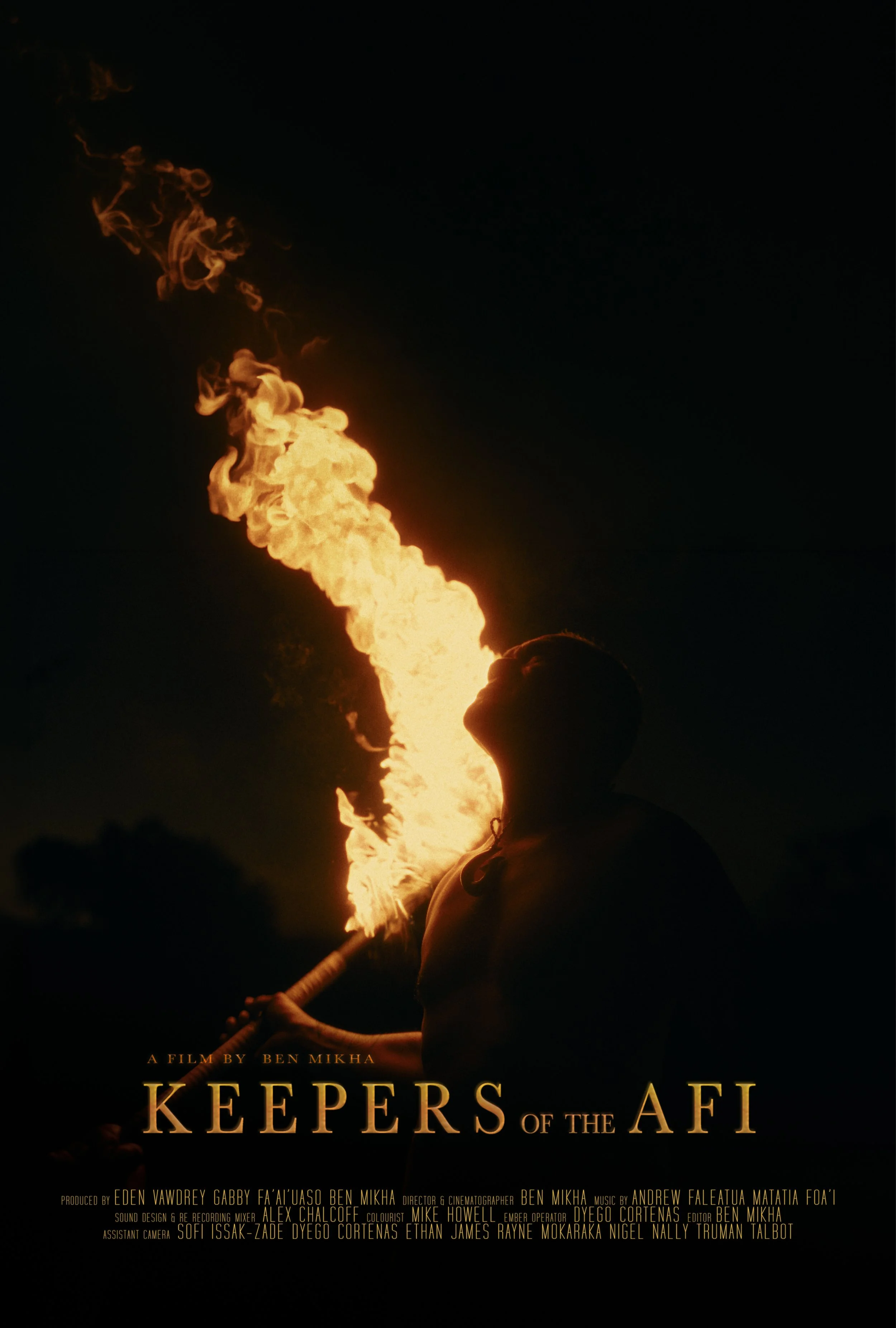
KEEPERS OF THE AFI
A film by Ben Mikha. Produced by Ben Mikha, Eden Vawdrey & Gabby Fa’ai’uaso.
Logline
A flame that once meant war now means cultural survival. Keepers of the Afi follows Siva Afi across Samoa and its diaspora, from an ancient Samoan war dance to a living inheritance: challenged, reclaimed and carried forward by a new generation that refuses to let it go out.
Short Synopsis
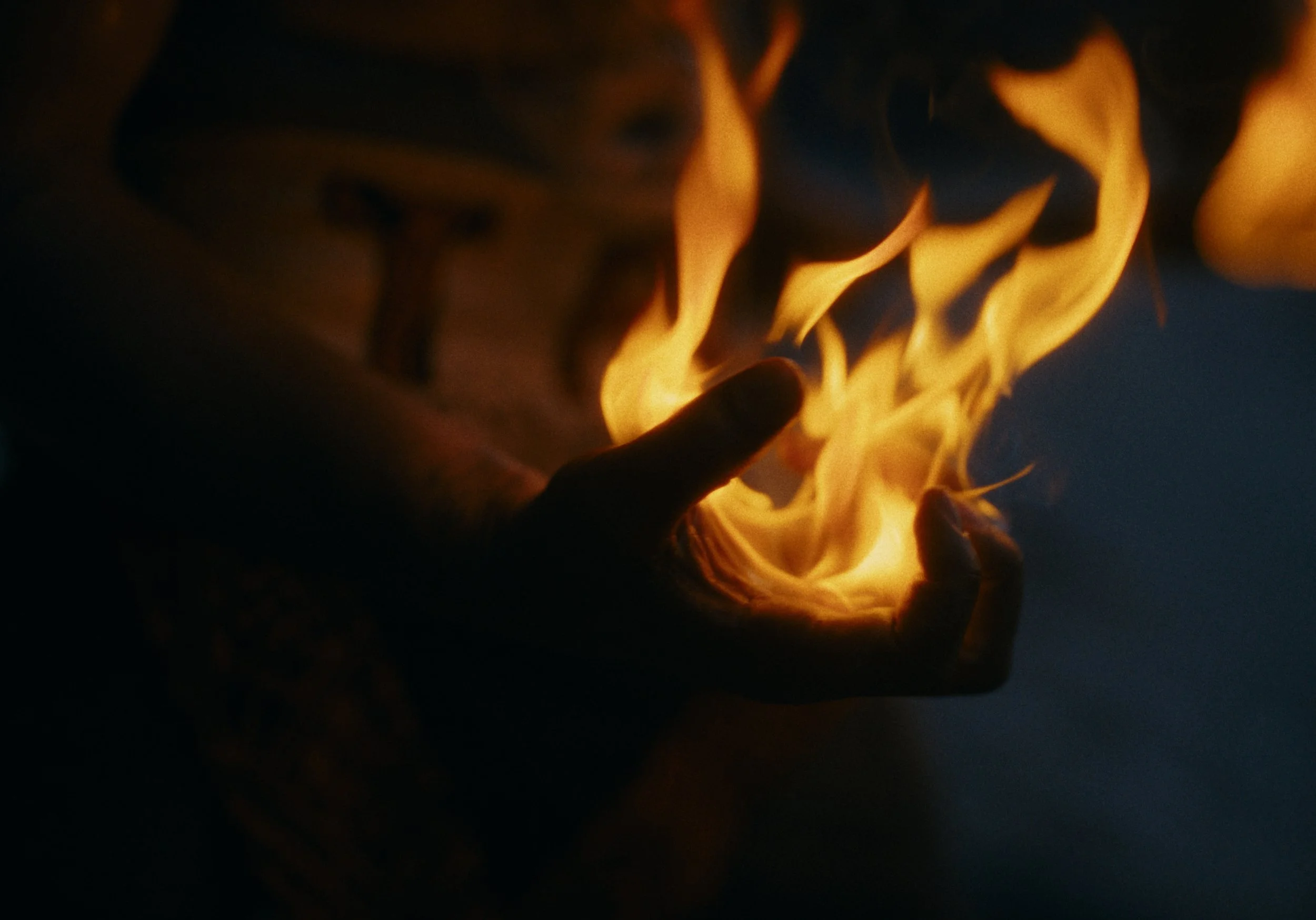
From Samoa to the Pacific diaspora, Keepers of the Afi explores how a culture evolves without losing the essence of where it came from.
Through five voices across Samoa, American Samoa, Hawaiʻi and Aotearoa New Zealand, the film traces Siva Afi, the Samoan fire knife dance, from its origins in the ancient war dance ailao to its place in the lives of a new generation. The family of pioneer Freddie Letuli reflects on his vision for the practice; a mentor works to keep the language and tradition alive for Pacific youth; a four-time world fire knife champion uses the dance to maintain his ancestral connection; and Miss Samoa and Miss Pacific Islands Moemoana Schwenke challenges who has the right to carry the flame, reclaiming the tradition’s connection to the Samoan warrior goddess Nafanua in the face of resistance to women’s participation.
Together, their stories reveal Siva Afi as more than performance. It becomes a vessel for Indigenous spirituality, identity, community and a pathway back to ancestry for a diaspora negotiating life between worlds.
As the flame passes from one generation to the next, Keepers of the Afi asks the questions; what does it mean to inherit a tradition and can culture can change without losing its essence?
As an Australian-born, mixed Samoan filmmaker raised in Aotearoa/New Zealand but never having travelled to Samoa until I was 23, I always felt a strong disconnect from my heritage. Growing up, I questioned why we never had our own cultural stories to share and wondered why my grandparents’ generation would call our pre-colonial history ‘the dark times’. Like many young Samoans, I wanted to better understand the traditions, history and ancestors that had shaped our culture. In that search, I eventually came across Siva Afi in my early years of beginning filmmaking.
I spent three years in the community helping their exhibitions with short-form videos of the practitioners. What stuck with me was a conversation I had with some of the younger members. I asked them if they knew the history of Siva Afi and where it had begun. To my surprise, they didn’t know it originated from their own Samoan culture and thought it was something that had always been around. I remember the intrigue in the young boys’ eyes as though I had the answer waiting, to which I didn’t at the time.
While in Samoa in 2024 for an uncle’s birthday, Siva Afi again came into my life through a performance during a Fiafia night at one of the hotels. I got talking to the performers and they mentioned they’d seen some of the work I had done within the community back home in Aotearoa/New Zealand. We made plans to catch up for sunset and capture a group performance on a petrified lava field south of the island of Upolu. When I got back home from the trip and cut the footage, I realised there really needed to be context for all those in the community to connect with. So I went out in search of some of the pioneers of the practice and I found Lino Sanft, a man living in isolation in the far North who had lived and breathed Siva Afi since he was 2 years old. He had been the lead performer for Disneyland, Cirque du Soleil, had been a key judge at the world fire knife champs in Hawai’i and had now settled into a quaint lifestyle amongst nature as he approaches retirement age.
Director’s Statement
I learned so much of the history, both recent and ancient and came to realise from interviewing him and other practitioners, the practice had a different meaning depending on who you were talking to.
What surprised me most was that there wasn’t one definitive meaning of Siva Afi. For some, it was a livelihood. For others, a path back to language and Pacific identity. For others still, it represented competition, excellence or family legacy. Together, those perspectives revealed a tradition that continues to evolve through the people who practise it and ultimately connect them back to Samoa and the wider Pacific.
Further inquiry led me to American Samoa, where I connected with Patricia Letuli, the surviving wife of Olo Freddie Letuli, paramount high chief in Tutuila and the man credited with transforming theancient Samoan war dance known as ailao into Siva Afi by adding fire to the knife in the 1940s. In recent times she has suffered multiple health scares and so it was a real privilege to be invited into her home by the sea to hear her reflections. Her stories offered an intimate perspective on Freddie beyond his public legacy and helped connect the history of Siva Afi to the people who continue to carry it today.
In meeting the wider community, sitting with them and learning their stories, I found a part of myself reconnecting with the very heritage I had always felt disconnected from. And in some ways, Siva Afi was the symbol that Samoan culture is still evolving, still in motion and we have a responsibility in shaping it. Whether through spinning fire or being behind the camera, we all have a role in carrying the flame forward.